Traditional grass has been difficult to maintain in our Florida yard, which has had me thinking about alternatives. Peanut grass is one I’ve wanted to try for a while. I love the lush, slightly whimsical look of all the greenery dotted with little yellow flowers.
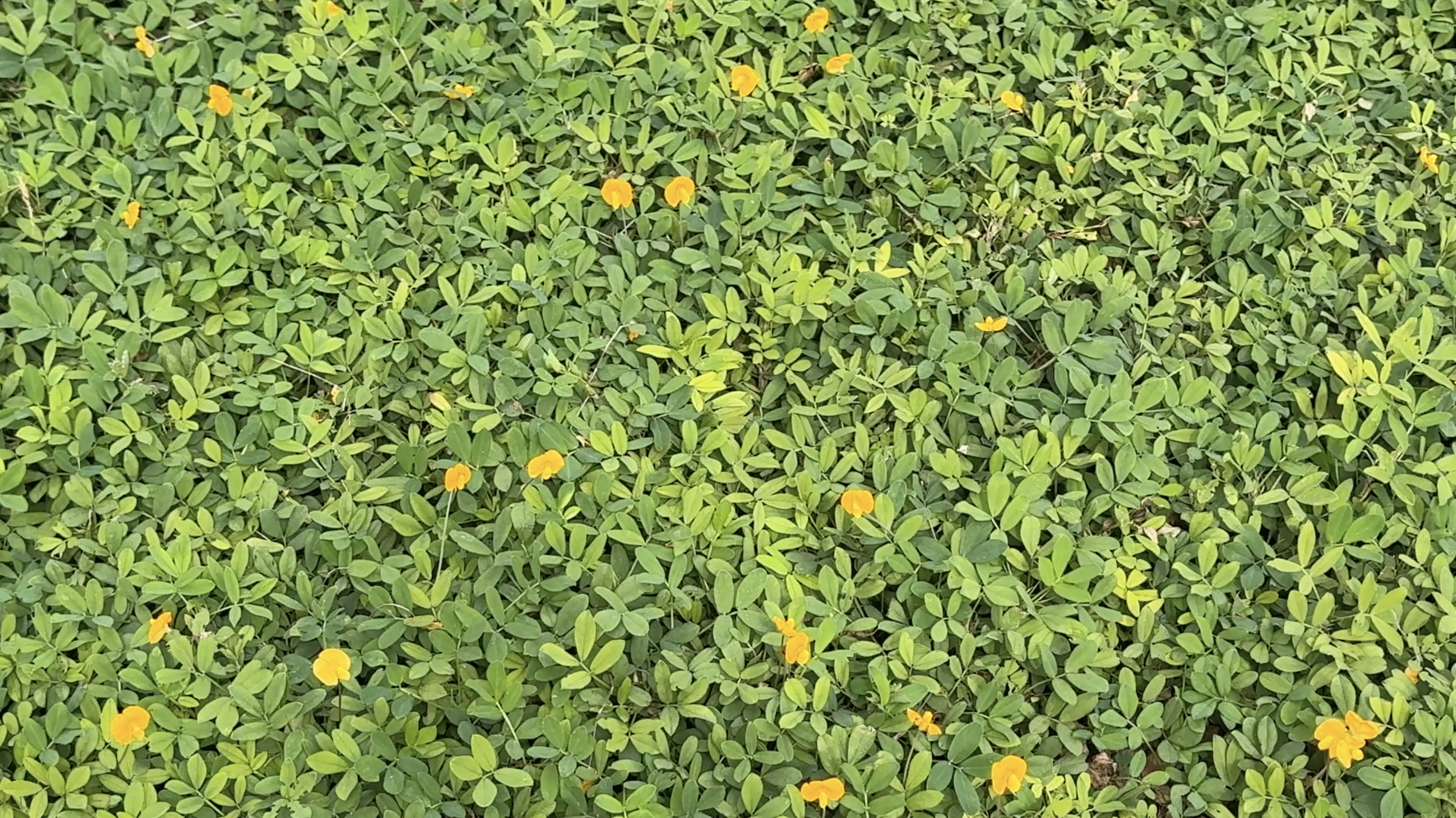
An established patch of peanut grass with the kind of vibrant, cheerful look that made me want to try it in my own yard.
My husband has told me several times that our front lawn doesn’t get enough sun for it to thrive. But I still wanted to see whether it could work somewhere in the backyard, even if I started with just a small patch. So when he moved our birdbath from the patio out into the grass, I found my test spot.
Starting small around the birdbath
We already love watching the birds bathe there. They’re so cute splashing around, and planting something pretty around the base seemed like a lovely addition to a spot we enjoy so much. This little project gave me a way to test the peanut grass and finally have a bit of the look I’d been wanting.
At first, though, I was underwhelmed. The plants looked sparse, and the patch didn’t quite resemble what I’d pictured. Adding a border made a big difference. It defined the planting area and helped everything look more finished while the plants had time to spread.
Now, about a month later, it has filled in a lot. There’s still more growing to do, but it already looks fuller and prettier. Seeing that progress has made me excited about its potential here.

My little patch of peanut grass, about a month after planting.
Thinking about trying peanut grass?
Peanut grass, also called perennial peanut, is a flowering groundcover that can be used in garden beds or as a lawn alternative in suitable spots. It flowers best in full sun, although it can also grow in partial shade.
If you’re considering a patch of your own, a few things can help you plan:
Check the drainage. Perennial peanut generally grows best in well-drained soil, so avoid spots where water tends to collect and linger.
Water during establishment. New plants need regular watering while they get established, even though established perennial peanut can be drought tolerant.
Leave yourself a path. It’s better suited to light foot traffic than frequently walked areas. If you decide to try it around a birdbath like I did, make sure you can still reach the basin for cleaning and refilling.
Define the planting area. Peanut grass spreads as it grows. Landscape edging installed into the ground can help limit its spread into neighboring areas, while a decorative border can give the space a finished, defined look.
Winter can bring a change in appearance. In frost-free conditions, perennial peanut can stay green while growth slows. Frost can brown the foliage and send it into dormancy, with growth returning as temperatures warm.
I shared the start of this project in a garden vlog that also includes a surprise mini sweet potato harvest, a trip to the plant nursery, and adding some indoor plants to the kitchen. You can watch it below.
A little more beauty in a favorite spot
Starting small has let me enjoy this plant without committing a whole section of the yard to it. I can see how it grows here, how it handles the seasons, and whether I’d like to plant more.
For now, I’m happy with how this little patch is coming together. The birdbath was already a favorite place to watch the birds, and the peanut grass has made the setting even prettier.
There’s still room for it to fill in, but a month of growth has given me a very promising beginning.
