A Backyard Full of Baby Cardinals
This post contains affiliate links. If you purchase through one of these links, I may earn a commission at no additional cost to you. As an Amazon Associate, I earn from qualifying purchases.
On a recent early-September morning, I looked outside and saw a young cardinal fluttering its wings, making tiny cheep-cheep sounds, and waiting for a parent to bring it something to eat. A few moments later, the parent delivered a bite exactly as the fledgling had requested, rather loudly and persistently.
It felt remarkable to see such a young cardinal this late in the summer. We have been watching cardinal fledglings in the backyard for months, yet the season still isn’t quite finished. Here in Florida, their family life seems to unfold across a lengthy stretch of the year.
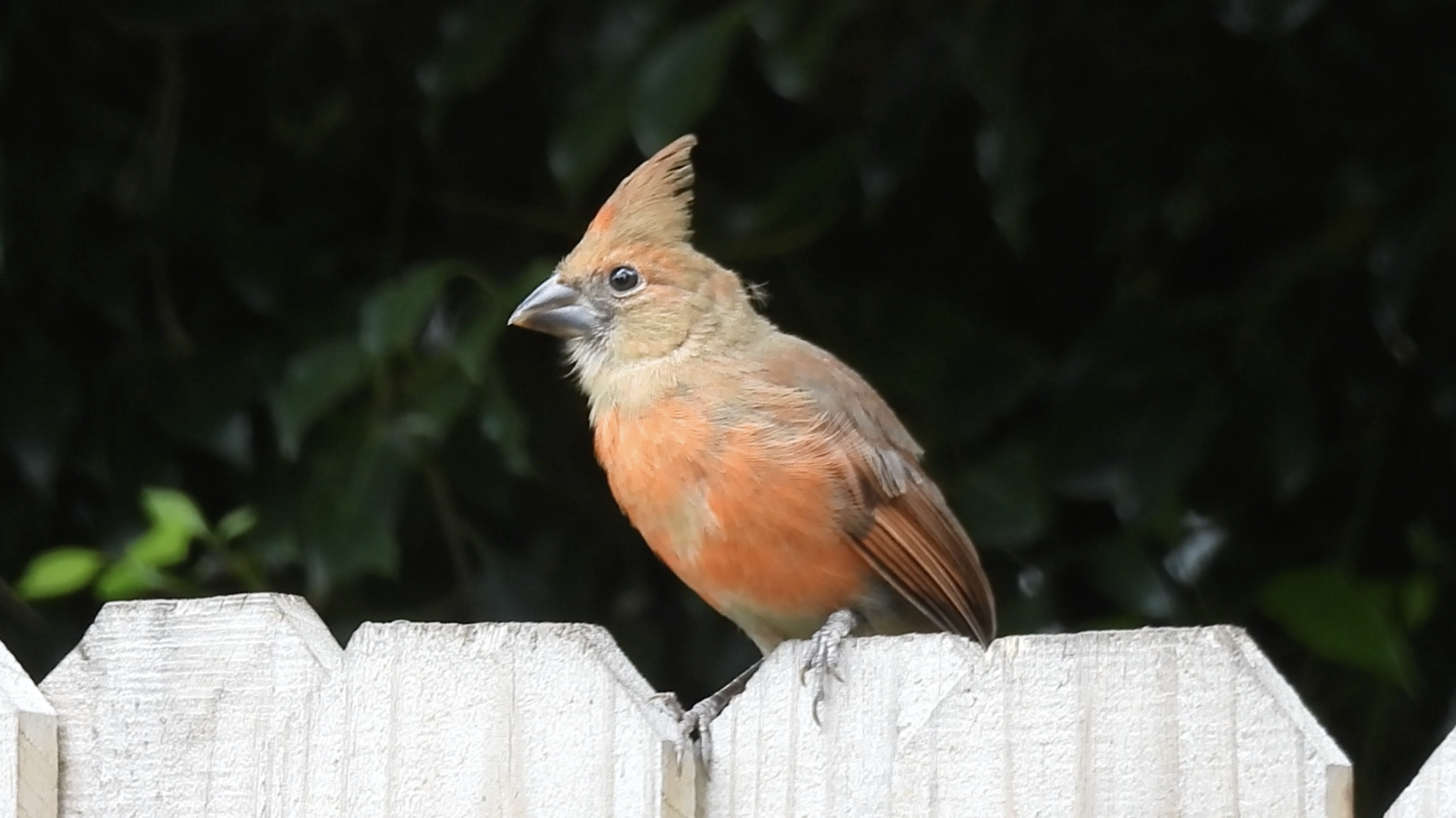
A young Northern Cardinal beginning to show his warm reddish feathers.
The First Birds In and the Last Birds Out
Northern Cardinals are part of our backyard every day, regardless of the season. They are usually the first birds to arrive in the morning, appearing in the dim light before the yard has fully awakened. In the evening, after many of the other birds have disappeared, the cardinals are still slipping between the feeders, shrubs, and trees.
During breeding season, however, their presence grows into something entirely different. The pairs are soon joined by young birds, and then there seem to be cardinal families everywhere. At times, I can look in nearly any direction and find one: a bright-red male perched along the edge of the yard, a female moving through the greenery, or a brown fledgling waiting impatiently to be fed.
We appear to have several cardinal family groups visiting our yard, although it can be difficult to keep track of exactly which young bird belongs to which pair. Their paths overlap throughout the day, creating a nearly continuous parade of red feathers, warm brown plumage, chirps, and demanding little feeding calls.
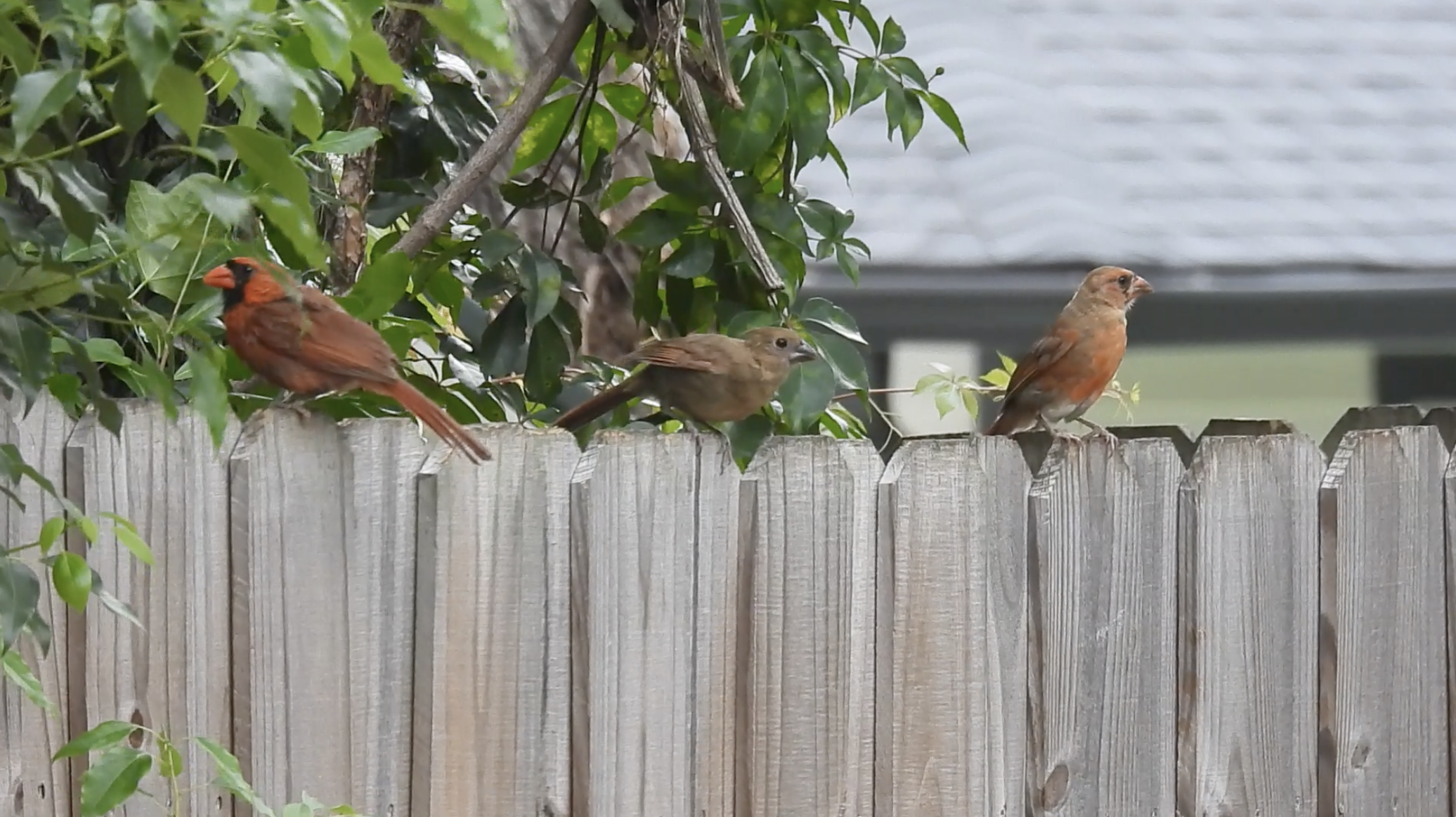
An adult male and two young cardinals gather along our backyard fence.
A Season That Seems to Keep Going
Cardinals commonly raise more than one brood during a breeding season. In Florida, nesting can begin in early spring and continue through late summer, with parents sometimes caring for recently fledged young while beginning another nesting attempt.
That helps explain why our backyard can seem to fill with young cardinals for months. Just as some begin looking more independent, another small, slightly scruffy fledgling appears. Its tail may still be short, its beak dark, and its flying skills a little uncertain. Then comes that unmistakable wing flutter, accompanied by persistent cheeping until a parent arrives with food.
Young cardinals leave the nest before they are fully independent, so the word fledgling does not mean that parental care has ended. Both parents feed their young, and the fledglings continue relying on them as they become stronger and learn to find food for themselves.
Watching this happen again and again has made the cardinals’ long breeding season feel almost like a summer-long family story. There are introductions to new fledglings, glimpses of their progress, and occasional moments when a young bird I have been watching suddenly looks far more grown than it did just a short time ago.
Recognizing the Young Cardinals
A newly fledged cardinal is generally brown, regardless of whether it is male or female. Young males do not begin life wearing the brilliant red feathers they will eventually develop, although reddish color may gradually appear in their wings, tails, or bodies as they mature.
The dark beak is another helpful clue. Adult cardinals have reddish-orange beaks, while a young cardinal begins with a much darker one. Combined with its muted feathers, short tail, uncertain movements, and frequent requests for food, that dark beak can make a young cardinal fairly easy to recognize.
The wing flutter may be the most endearing clue of all. A fledgling crouches slightly, rapidly shakes its wings, and calls to the adult with great enthusiasm. It is a performance that is difficult to overlook and apparently difficult for a cardinal parent to ignore.
Giving Cardinal Families Room to Grow
When a fledgling appears in the yard, the best way to enjoy it is usually from a little distance. A young bird may spend time on the ground or on a low branch while its parents continue tending to it nearby. It can look vulnerable while still being exactly where it is supposed to be.
Shrubs and other dense plantings give cardinal families places to forage, rest, and quickly retreat when they need cover. Water is valuable too, especially during a Florida summer. A clean birdbath offers a place to drink and bathe when the days are relentlessly hot.
Cardinals readily visit feeders for sunflower and safflower seeds, but their natural food sources are also important. Adult cardinals eat a varied diet that includes seeds, fruits, and insects, while growing young are fed large amounts of insects. A yard with plants, leaf litter, and fewer pesticides can support the small creatures that help nourish the next generation of backyard birds.
Our window feeder has become another favorite stop for the cardinals. Watching them land just inches away gives me an amazing close-up view, especially when the young birds begin visiting with their parents. If you would love a similarly close view of the birds in your own yard, I have gathered a few well-reviewed window bird feeders among my Backyard Birdwatching Favorites on Amazon.
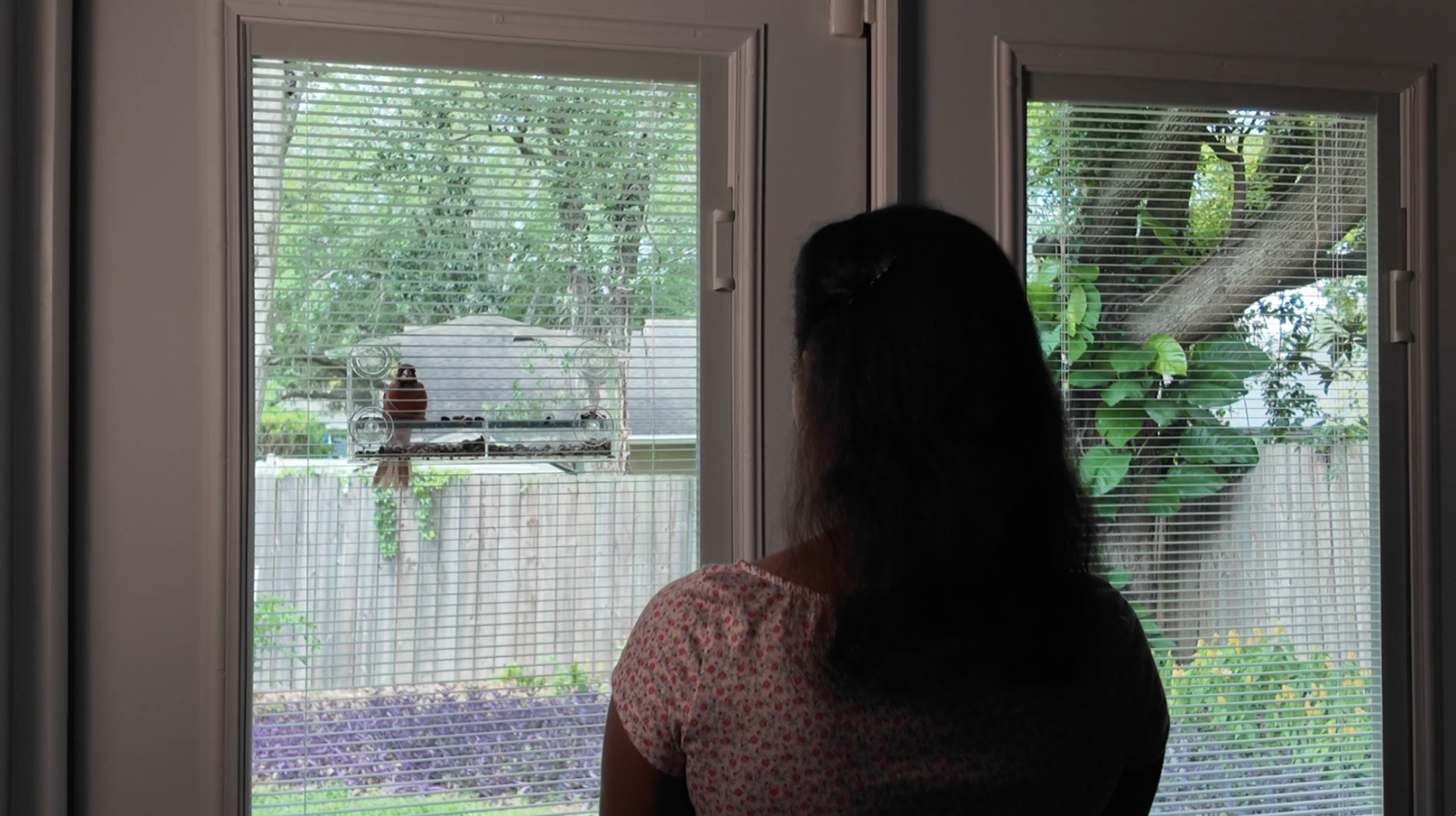
Our window feeder brings visiting cardinals just a few feet from where I stand.
Clean feeders and fresh water are especially important when many birds are gathering in the same space. I also try to let the parents decide how closely they are comfortable approaching. Remaining still and allowing them to continue their routine gives me a much better chance of seeing those sweet feeding moments without disrupting them.
A Backyard Filled with Red Feathers
It would be easy to become accustomed to cardinals because they are here so consistently. They do not migrate away from Florida for part of the year, and their familiar calls belong to every season in our backyard. Yet the arrival of each new group of fledglings makes them feel special all over again.
By late summer, the yard may hold cardinal youngsters in several stages of growing up. Some are still fluttering their wings and begging for every bite. Others are beginning to feed themselves but remain close to their parents. The older juveniles are gradually trading their babyish appearance for the colors and confidence of adulthood.
Soon, the breeding season will wind down, and the youngest cardinals will become harder to distinguish from the generations that came before them. For now, though, the backyard is still filled with cardinal families. From the first early-morning visit to the final red flash of the evening, there always seems to be another cardinal waiting somewhere just within view. Even in September, one of them may be a hungry fledgling calling to be fed.
